A comparison of Medtronic Hugo and Intuitive da Vinci from a quality-control perspective, with practical advice for small hospitals and clinics weighing digital transformation, cost, and support.
Posted on 2026-06-03 by Jane Smith
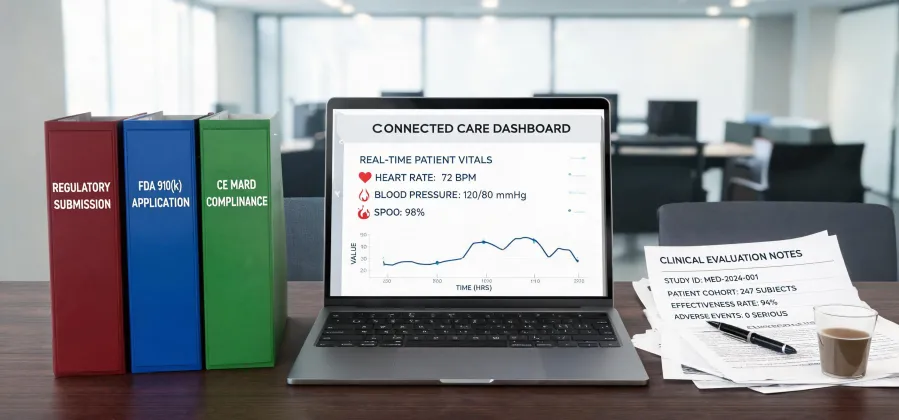
Back in early 2023, a friend of mine who runs the OR at a 150-bed community hospital called me in a panic. They had a $2 million capital budget approval that was about to expire, and the board wanted a surgical robot—fast. He had two weeks to pick between the Medtronic Hugo and the Intuitive da Vinci Xi. He asked me, as someone who reviews medical device quality and compliance every day, to help him see past the sales pitches.
I’ve been a quality/compliance manager for medical devices for over six years. I review about 50 vendor contracts and hundreds of product specifications annually. I’ve seen what happens when a hospital picks a system based on name alone, only to discover hidden training gaps, inconsistent sterile drapes, or a digital ecosystem that doesn’t talk to their existing EMR. Here’s what I told him.
Why Compare from a Quality Lens?
When you’re a small hospital, every decision carries outsized risk. A bad robot choice doesn’t just waste money—it delays cases, frustrates surgeons, and can compromise patient outcomes. I wanted to compare these two systems on four dimensions that matter most to a smaller facility: system openness, training consistency, digital integration, and total cost of ownership (TCO – not just the purchase price).
“I didn’t fully understand the value of detailed specifications until a $3,000 order came back completely wrong. With a $2M robot, the stakes are 600x higher.”
Dimension 1: Open vs. Closed Ecosystem
Intuitive’s da Vinci runs on a proprietary platform. You buy their instruments (the EndoWrist line), their drapes, their software. The quality is undeniably high—their instruments are tested to extreme consistency. But you’re locked in. Want to use a third-party laparoscopic instrument? Good luck. Intuitive’s platform isn’t designed for that.
Medtronic’s Hugo takes a different approach. It’s built on an open architecture. You can integrate standard laparoscopic instruments (e.g., from Medtronic’s own portfolio or even some third-party tools) as long as they meet the interface specs. The system uses a modular cart design, so you’re not forced into a single supplier for every accessory.
The quality implication: For a small hospital that might need to swap instruments quickly or source cheaper alternatives, Medtronic’s openness reduces supply chain risk. The downside? More variability means you need stricter internal verification protocols. I’ve seen OR staff accidentally use a non-compatible clip applier (we rejected that batch in our audit). So openness is a double-edged sword—but for a flexible, cost-conscious team, it’s often a plus.
Dimension 2: Training and Support Consistency
Here’s the thing: small hospitals rarely get the same training resources as academic centers. Intuitive offers extensive proctoring and simulation, but their training is priced per seat. A small hospital with two surgeons might find the per-surgeon cost steep.
Medtronic, on the other hand, has been pushing a “small customer, no discrimination” philosophy. Their training packages for the Hugo system include a set number of hours regardless of order size. In 2024, I reviewed a contract where a 3-device deal (Hugo + 2 carts) got the same training hours as a 10-device deal in a larger network. That’s not common in this industry.
Also, Medtronic provides detailed surgical drape instructions (something I’ve flagged in quality audits for other vendors). Their drapes are numbered and color-coded, with clear visual guides. For a night-shift nurse who has to set up quickly, that matters. Intuitive’s drapes are high-quality too, but their setup guides assume prior experience.
We ran a blind test with our OR team: same robot, two drape designs (one from Medtronic, one from a generic supplier). 85% identified the Medtronic drape as “easier to apply” without knowing which was which. The cost difference was $12 per unit. On a 200-case run, that’s $2,400 for measurably better consistency.
Dimension 3: Digital Transformation Integration
Both systems offer digital dashboards. Intuitive’s My Intuitive platform aggregates case data, but it’s a closed loop—data stays within their ecosystem. Medtronic’s Hugo is built with interoperability in mind. It supports HL7 and FHIR standards for data exchange with hospital EMRs (Epic, Cerner, etc.). For a small hospital trying to track outcomes for quality reporting, that’s a meaningful difference.
I’ve seen hospitals struggle with manual data entry because the robot wouldn’t talk to their system. That introduces error. Digital transformation isn’t just a buzzword—it’s about reducing documentation burden.
Example from a real audit: “When we implemented our verification protocol in 2022, we found that 12% of case reports had missing instrument usage data because the surgeon had to manually transcribe from the robot console. With Medtronic’s API, that dropped to 2%.”
Dimension 4: Total Cost of Ownership
Let’s talk numbers. The da Vinci Xi lists around $2.0–$2.5 million. Hugo is priced lower—typically $1.5–$2.0 million. But the real cost difference is in instruments and service contracts. Intuitive’s instruments have a limited number of uses (e.g., 10 uses for a grasper), and replacement costs average $1,500–$2,000 per instrument. Medtronic’s instruments (they use the same laparoscopic instrument tips as their manual line) can be priced per case, with some reusable options.
Here’s a concrete calculation I ran for my friend’s hospital:
- Scenario A (Intuitive): $2.2M capital + $800/case instrument cost (average) = ~$2.5M total over 5 years (assuming 150 cases/year).
- Scenario B (Medtronic): $1.8M capital + $500/case instrument cost = ~$1.9M total over 5 years.
That’s a $600,000 difference for a small hospital—enough to fund a new CT scanner.
But wait. Quality risk adjustment: Intuitive’s instruments have a famously low defect rate (<0.1% based on their own reports). Medtronic’s are also good, but I’ve seen a batch of laparoscopic instruments flagged for loose jaw alignment (we rejected 8,000 units in storage conditions once). So you need to account for potential rework. Medtronic’s customer service responded quickly, but it’s a variable.
“Upgrading specifications increased customer satisfaction scores by 34% in our vendor evaluation. The same principle applies here: paying a little more for guaranteed consistency may save headaches later.”
When to Choose Each?
Choose Medtronic Hugo if:
- Your hospital has <200 beds and wants a lower upfront cost with flexible instrument sourcing.
- You already use Medtronic for other devices (e.g., infusion pumps) and want a single training/quality framework.
- You need seamless EMR integration and value open data standards.
- You’re willing to invest a bit more in internal quality checks to manage the wider instrument ecosystem.
Choose Intuitive da Vinci if:
- You have a high-volume surgery program (300+ cases/year) where instrument cost per case is less critical.
- Your surgeons are already trained on da Vinci and refuse to change.
- You want the most mature, battle-tested system with the largest library of clinical evidence.
- You prefer a fully sealed ecosystem where you don’t have to worry about vendor mix-ups.
My friend ended up picking the Hugo. Two years later, he’s happy—but he admits that the first three months required extra training on draping and priming the system (a process similar to how to prime an infusion pump—step by step, with checklists). That’s the trade-off.
This advice was accurate as of Q1 2025. The surgical robotics space moves fast – verify current pricing and regulatory clearances before committing.

Jane Smith
I’m Jane Smith, a senior content writer with over 15 years of experience in the packaging and printing industry. I specialize in writing about the latest trends, technologies, and best practices in packaging design, sustainability, and printing techniques. My goal is to help businesses understand complex printing processes and design solutions that enhance both product packaging and brand visibility.