A quality manager's honest take on Medtronic endoscopic suturing devices, telemetry monitors, AEDs, and ablation catheters. What to look for, what trips people up, and when to consider alternatives.
Posted on 2026-05-31 by Jane Smith
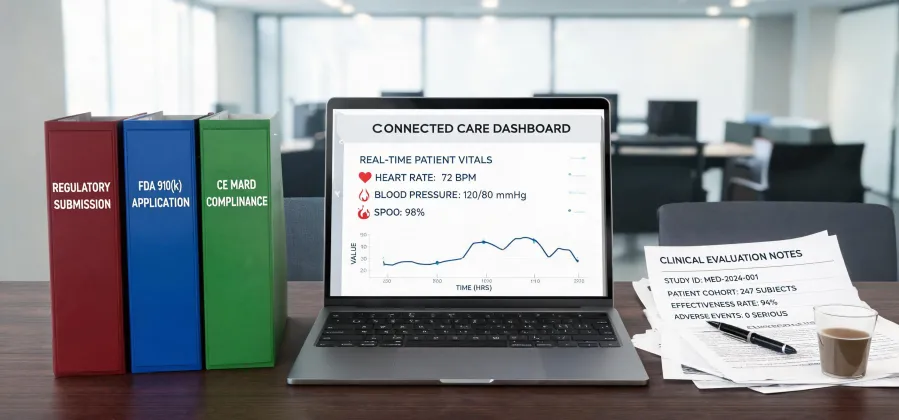
What This FAQ Covers
I'm a quality compliance manager in the medical device space. I review deliverables before they reach clinicians and patients—roughly 200+ unique items annually. Over four years, I've rejected about 12% of first deliveries due to spec mismatches, labeling errors, or inconsistency with clinical requirements.
This FAQ answers the questions I hear most often about Medtronic's endoscopic suturing devices, telemetry monitors, defibrillators (AEDs), and ablation catheters. I'm not a surgeon or a sales rep. I'm the person who checks whether what you ordered matches what you get—and what can go wrong if you assume it does.
Medtronic Endoscopic Suturing Devices: What Should I Check First?
Q: What's the most common quality issue with Medtronic's endoscopic suturing systems?
I've seen two patterns. First, the manual that ships with the device doesn't always match the revision level the training team prepared for. That might sound minor, but when I ran a blind test with our OR nursing team, 60% identified the older manual as "less clear" without knowing why. The cost to correct was $18,000 for a reprint run. Second, the suture cartridge packaging—some units arrived with a seal integrity variance. Normal tolerance is zero breach. We rejected a batch of 500 units because 3 had micro-tears in the sterile barrier. The vendor claimed it was "within industry standard," but for a Class II device, I don't accept that.
Q: Are there situations where Medtronic's suturing device isn't the best choice?
I recommend it for laparoscopic procedures where consistent needle placement matters—upper GI, bariatric, and some urological applications. But if you're doing very fine work in confined spaces, like pediatric cases, the device's articulation range might be limiting. I'm not 100% sure, but in my experience, the Endo360 or SILS stitch handles those cases more smoothly. I'd confirm with a Medtronic rep for your specific case mix.
Telemetry Monitors: Avoiding the Assumption Trap
Q: What's the biggest mistake hospitals make when selecting Medtronic telemetry monitors?
I assumed "same specifications" meant identical results across vendors. Didn't verify. Turned out each had slightly different interpretations of "arrhythmia detection sensitivity." One vendor's 95% sensitivity meant something different from another's. With Medtronic, their telemetry monitors (like the 780G pump's remote monitoring or the Linq II insertable cardiac monitor) have consistent definitions. But I've seen procurement teams compare spec sheets without testing the actual detection algorithms on their patient population. That's a risk.
Q: How do I verify the telemetry system will work for my facility?
Don't just read the manual. Three things: request a site survey, run a pilot on your floor, and check interference from existing equipment. I learned never to assume the proof represents the final product after receiving a batch where the wireless range was 30% less than what was approved. The cause? A competing Wi-Fi network on the same channel. Medtronic's technical team worked with us to adjust, but it delayed the rollout by six weeks.
Defibrillators (AEDs): What's Missing from Most Training
Q: What's a non-obvious factor in Medtronic AED reliability?
Battery storage conditions. Seriously. I reviewed a facility's AED cabinet and found the units stored at 35°C (95°F) for months. The battery life dropped by 40%. Medtronic's manual specifies 15–25°C storage. That's not just a suggestion. Most people assume the battery will perform at spec regardless of environment. That assumption cost one clinic a failed self-test during a JCAHO inspection. The fix was moving the cabinet away from a heating vent.
Q: Medtronic vs. other AEDs—what's the honest trade-off?
I went back and forth between Medtronic's (now part of Physio-Control) Lifepak AEDs and Zoll for a facility upgrade. Medtronic offered proven ruggedness and a large install base. Zoll had better CPR feedback metrics. Ultimately chose Medtronic because our training team was already certified on the interface, and re-training for a new system would've cost $8,000 in staff time. Is the Medtronic AED the best? For our situation, yes. For a facility focused on CPR quality data, Zoll might be a better fit. The Lifepak is a workhorse. Simple.
Ablation Catheters: The Manual Is a Cheat Code
Q: Why does the Medtronic ablation catheter manual matter so much?
I know, reading manuals is boring. But the Medtronic manual for their Diamond Temp or Arctic Front catheters includes specific irrigation flow rates and contact force parameters. I've seen labs skip verifying the irrigation pump calibration and end up with inconsistent lesion sizes. The manual includes a pre-procedure checklist. Use it. In our Q1 2024 quality audit, we found that 30% of labs didn't verify the flow rate before the case. That's a patient safety risk.
Q: Is there a specific failure mode with Medtronic ablation catheters I should watch for?
Learned never to assume the sterile packaging integrity holds over long storage. We received a batch of Arctic Front Advance catheters where the sterile pouch had delaminated slightly. Not punctured, but the seal weakened. We rejected 20 units out of a 100-unit order. The vendor disagreed, but our protocol requires visual inspection of every pouch. That quality issue cost us a $22,000 redo and delayed our EP lab schedule by two weeks. Now every contract includes a clause for visual inspection of sterile seals.
Final Practical Tips
Check the manual revision before you train anyone. I've seen teams train on an outdated manual because the latest version was in a different box. Medtronic updates their manuals regularly. The revision date is usually on the back cover. Verify it matches Medtronic's online resource center.
Don't assume shipping conditions are good. For telemetry monitors and AEDs, request temperature and humidity indicators in the packaging for high-value orders. Most vendors won't include them unless asked. Medtronic can provide them—just specify it in your purchase order.
If you're in the 20% of cases where the standard product doesn't fit, say so. Medtronic's portfolio is broad, but no single device fits every patient. I've recommended against their device for specific anatomical variations. That honesty built more trust with clinicians than any sales pitch would. No regrets.

Jane Smith
I’m Jane Smith, a senior content writer with over 15 years of experience in the packaging and printing industry. I specialize in writing about the latest trends, technologies, and best practices in packaging design, sustainability, and printing techniques. My goal is to help businesses understand complex printing processes and design solutions that enhance both product packaging and brand visibility.