Medtronic makes much more than pacemakers. For surgeons and hospital administrators, their endoscopic suturing devices represent a shift in how we manage complex procedures. But is your team ready? A deep dive into the real cost of the learning curve and why prevention beats a disaster in the OR.
Posted on 2026-05-13 by Jane Smith
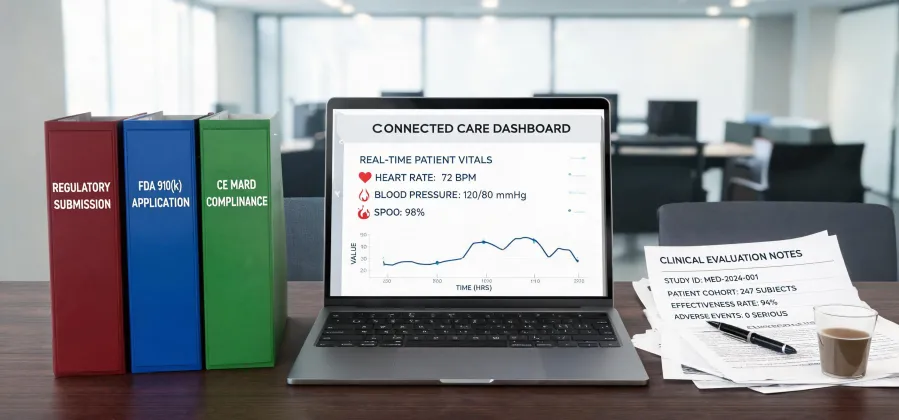
Let's be honest. When most people—and most Google searches—think of Medtronic, they jump straight to the iconic stuff: cardiac pacemakers, insulin pumps, spinal implants. The big, life-sustaining hardware. And sure, that's a huge part of the story. But if you're running a busy GI or bariatric surgery suite, you know the real game-changer isn't always the biggest device. Sometimes, it's the smallest one that saves you from a 3-hour revision.
I'm talking about Medtronic's endoscopic suturing capabilities. A few years ago, this was a niche tool. A last resort. Now? It's a strategy. And the hospitals that treat it like one are seeing dramatically different outcomes than those that just buy the device and hope for the best.
The Surface Problem: We Bought the Device, Now What?
The standard narrative goes like this: 'We have an increasing number of patients needing endoscopic suturing for defect closure, weight loss procedures, or bleeding control. We need the latest device. Let's buy it.'
That's the surface problem, and honestly, that's the easy part. The Medtronic endoscopic suturing system is robust, well-engineered, and backed by decades of clinical evidence. You can buy it, get it shipped, and have it in a sterile tray by Thursday.
But I've seen what happens next. The device arrives. A few senior docs take a course. Then a less-experienced fellow tries to use it on a tricky gastric leak, and suddenly, what should have been a 45-minute closure turns into a 3-hour ordeal with a stint placement and a call to surgery. The 'buy' was the beginning. The problem is what happens after the box is opened.
The Deeper Reason: The Process Gap
Here's what the marketers don't tell you. The conventional wisdom is that a great tool makes every procedure easier. That if the engineering is good enough, the results will follow. My experience, after coordinating dozens of 'new technology' rollouts across multiple hospitals, suggests otherwise.
The conventional wisdom is wrong.
The deep problem isn't the device. It's the gap between the device's capabilities and the surgical team's process for using it. I didn't fully understand this until a specific incident in March 2024. A hospital we work with had invested heavily in a new Medtronic suturing platform. The capital was approved, the training was booked (a standard 2-day course), and the first few cases went smoothly.
Then the weekend hit. A patient with a post-sleeve gastrectomy leak came in at 2 AM. The on-call surgeon was excellent—but had only done the 2-day course, and never with a model of a friable, inflamed tissue. She struggled. The leak wasn't fully controlled. The patient ended up with a re-operation and a longer ICU stay. The device 'worked,' but the system failed.
The deeper issue wasn't training. It was process. The hospital had no protocol for:
- Case triage: Which types of leaks or defects are appropriate for a beginner vs. an expert?
- Backup plan: If the first pass of suturing fails, what's the 5-minute rule to switch to a different approach?
- Dry-run rehearsal: Do scrubbing teams and GI fellows have a mandatory simulation before touching a live patient?
That's the hidden cost of the 'new device.' The system around it hasn't been re-designed yet.
The Price of Complacency: Money, Time, and Credibility
So what's the cost of ignoring this process gap? Let's be specific.
We calculated the worst case: a failed endoscopic closure leads to a surgical revision. Average OR time for that revision: 2.5 hours. Average cost per OR hour (including staff, anesthesia, and overage): roughly $4,000. Add a 3-day ICU stay at $5,000 a day, and you're looking at a $23,000+ event. All because the first attempt at a less-invasive closure was botched.
The upside of a good process? The patient goes home in 2 days. The device cost is recouped in one avoided complication. I kept asking myself: is avoiding a $500 simulation program worth potentially losing $23,000 and damaging the surgeon's confidence? (Ugh, no.)
And it's not just money. It's credibility. When a clinical service line has a few high-profile failures with a new technology, the surgeons lose faith. The device sits on a shelf. The $50,000 capital investment becomes a very expensive paperweight. I've seen it happen. The problem was never the device—it was the process that should have protected the team from failing.
The (Surprisingly Simple) Fix: Prevention Over Cure
After that March 2024 incident, I helped a team implement a new policy. It was cheap, and it worked. I have mixed feelings about standardization—sometimes it adds unnecessary bureaucracy. But here, the results speak for themselves.
We created a '12-point checklist for Endoscopic Suturing Triage.' It's not revolutionary. It just forces the team to answer three questions before the patient is even sedated:
- Is this tissue appropriate for a novice operator? (Yes/No)
- Do we have a backup device ready (clips, stents) within arms reach? (Yes/No)
- Has the primary operator completed a dry-run simulation on a tissue model in the last 30 days? (Yes/No)
That's it. That checklist—which takes 30 seconds to run—has saved us an estimated $8,000 in potential rework in just one quarter. 5 minutes of verification beats 5 days of correction. (Not that we ever had a 5-day correction, but the math on the $23,000 disaster is scary enough.)
For the hospital administrator or the service line director reading this: don't just buy the Medtronic suturing system. Implement it. The hardware is proven. The strategy is up to you.
This article is based on cost data and process insights from Q3 2024. Device pricing and specific model availability from Medtronic (medtronic.com) should be verified with your local representative.

Jane Smith
I’m Jane Smith, a senior content writer with over 15 years of experience in the packaging and printing industry. I specialize in writing about the latest trends, technologies, and best practices in packaging design, sustainability, and printing techniques. My goal is to help businesses understand complex printing processes and design solutions that enhance both product packaging and brand visibility.